CAPSTONE - University Project
Formula SAE EV Aerodynamics
As a part of a five-member capstone team, the objective of this project was to parametrize and optimize a Formula SAE EV under varying conditions to meet performance targets. My role focused on the aerodynamic subsystem, where I developed analytical aerodynamic and optimization models to reach target downforce, balance, cooling, and subsystem integration based on user-defined inputs and vehicle constraints defined in the competition rulebook.
Download Capstone Report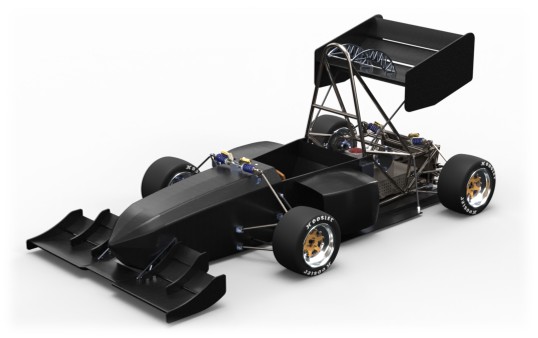
My Role
-
Aerodynamics Design:
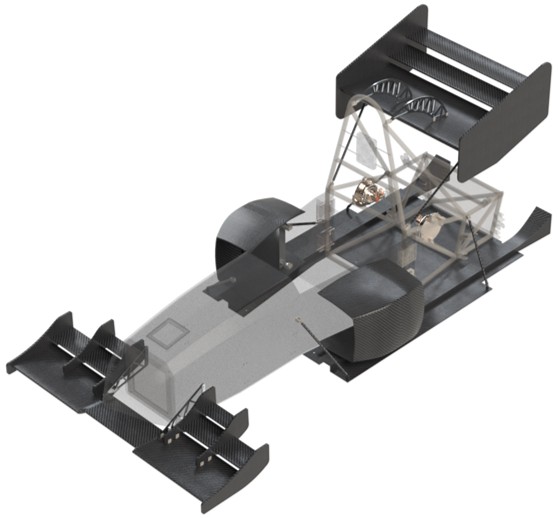
- Multi-element wing designs to minimize flow separation and generate high downforce.
- Undertray tunnels which produce the highest lift to drag ratio due to relatively low drag.
- Sidepods creating low-pressure regions behind the radiators to promote increased airflow.
- Performed vehicle dynamics modelling to determine downforce targets in cornering.
- Utilized multi-element airfoil theory and induced velocity to estimate downforce.
- Analysed pressure loss, Bernoulli’s principle and energy conservation for the sidepods.
- User-defined inputs of car mass, lateral acceleration targets and average cornering radius.
- Iterative optimization approach used to vary angles of attack to achieve downforce targets.
- Parametric CAD optimized using MATLAB aerodynamic analysis and performance calculations.
Engineering Analysis:
Optimization:
Project Timeline
Report
Report
Report
Literature Review Report
The team goal for this deliverable was to establish the technical foundation for the project through a review of existing Formula SAE vehicle design principles and relevant engineering approaches. This review examined competition regulations, established design practices, and existing technologies to guide the development of a safe, compliant, and high-performance electric Formula SAE vehicle.
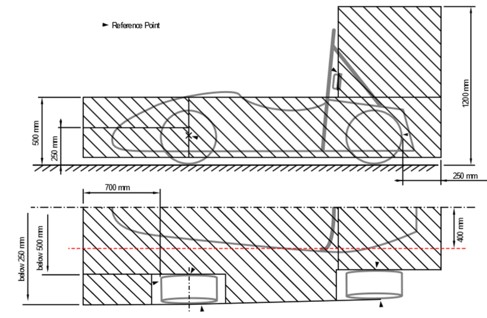
My role throughout this deliverable was to compare aerodynamic packages from existing Formula SAE vehicles and evaluate their designs against competition regulations and aerodynamic principles. This comparison helped identify effective design approaches, evaluate trade-offs between different configurations, and establish the direction for the vehicle's aerodynamic development.
Skills
- Aerodynamics Development
- Vehicle Dynamics
- FSAE Vehicle Design
- Performance Analysis
- Mechanical Design
- Parametric CAD
- Free-Body Diagrams
- Hand-calculations
- Technical Report Writting
- SolidWorks
- MATLAB
- Microsoft Excel
- Microsoft Word